

At Diabetes, Thyroid & Hormone Center Of The Treasure Coast, we specialize in helping patients navigate the complexities of autoimmune health. We believe that what you put on your plate is just as important as the medicine you take. If you are ready to lower your antibodies and reclaim your energy, this guide to anti inflammatory eating tailored for our Treasure Coast lifestyle is your roadmap to success.
The Autoimmune Connection: Why Inflammation Matters
Hashimoto’s is not just a thyroid problem; it is an immune system problem. When your immune system is in a state of chronic inflammation, it continues to produce antibodies that damage your thyroid tissue. This can lead to the “tossing and turning” nights, the debilitating brain fog, and the stubborn weight gain that standard TSH tests often fail to capture.
An anti inflammatory diet works by removing the “triggers” that keep your immune system on high alert. By choosing foods that soothe the gut and support hormonal balance, you can reduce the autoimmune attack and help your thyroid function more efficiently.
The Pillars of a Hashimoto’s Friendly Diet
When building a nutritional plan for our patients in St. Lucie West, we focus on high quality, nutrient dense ingredients that are easily accessible at local spots like Tradition Square.
1. Focus on Whole, Single Ingredient Foods

- The Treasure Coast Advantage: We are lucky to have access to fresh, local produce year round. Focus on colorful vegetables, lean proteins, and healthy fats.
2. Prioritize “Thyroid Superfoods”

Certain nutrients act as the building blocks for thyroid hormone production and conversion.
- Selenium: Found in Brazil nuts and sardines, selenium helps protect the thyroid from oxidative stress and assists in converting T4 into the active T3 hormone.
- Zinc: Essential for hormone triggering, zinc can be found in pumpkin seeds and grass fed beef.
- Magnesium: Crucial for over 300 biochemical reactions, magnesium helps improve sleep quality and reduce the muscle aches often associated with Hashimoto’s.
3. The Great Gluten Debate
For many Hashimoto’s patients, gluten is a major inflammatory trigger. The molecular structure of gluten is very similar to thyroid tissue. When a person with “leaky gut” eats gluten, the immune system may attack both the gluten and the thyroid a process known as molecular mimicry. While not every patient must be 100% gluten free, many find significant relief from joint pain and brain fog by removing it from their diet.

Navigating the Treasure Coast: Eating Out and Shopping
Living in Port St. Lucie doesn’t mean you have to miss out on the local food scene.
- Dining at Tradition Square: When eating out, look for “farm to table” options. Choose grilled proteins (fish or chicken) and ask for double vegetables instead of grains. Most local chefs are happy to accommodate “clean eating” requests when you explain you are following an anti inflammatory protocol.
- Local Markets: Spend your Saturday mornings at local farmer’s markets. Fresh, local honey (in moderation), organic greens, and seasonal fruits are much higher in bioavailable nutrients than grocery store produce that has spent weeks in transport.
Your First 30 Days: The Nutritional Roadmap
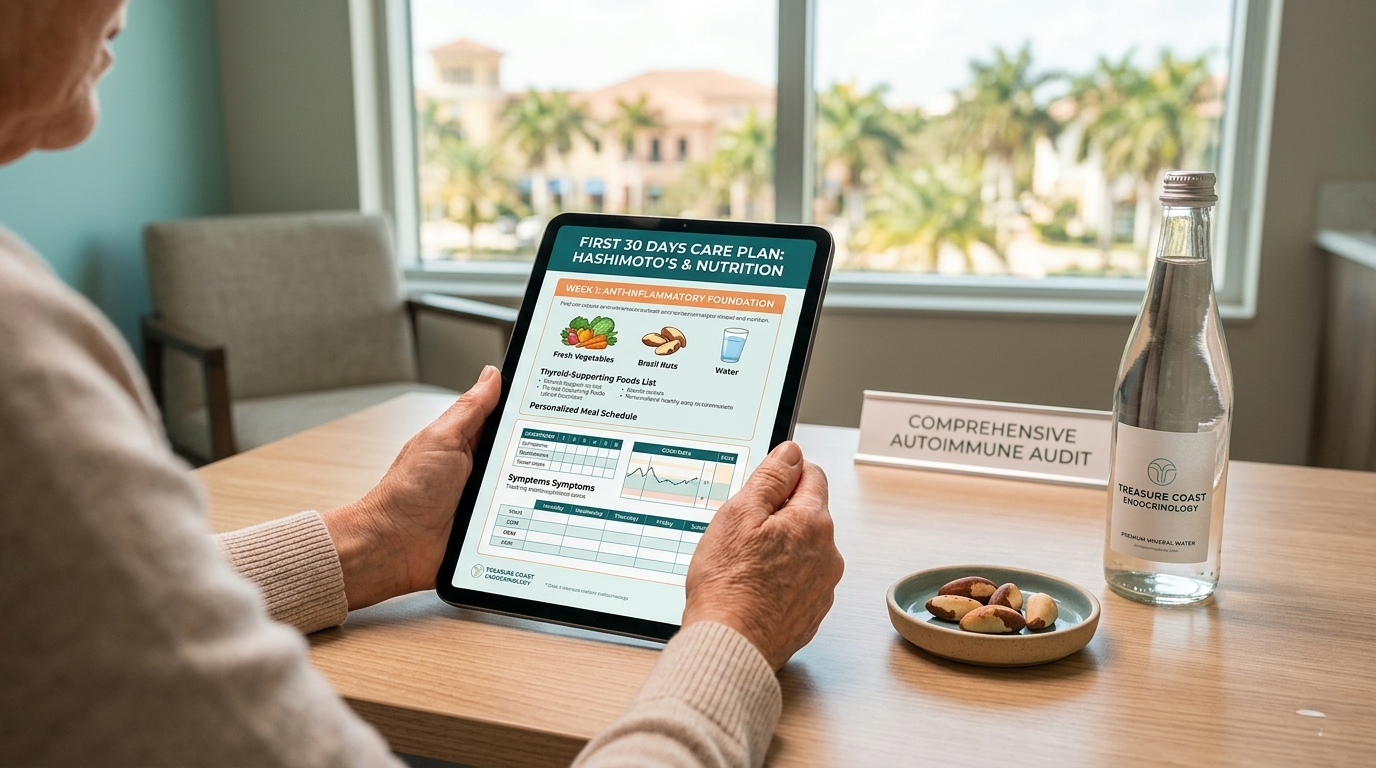
At Diabetes, Thyroid & Hormone Center Of The Treasure Coast, our First 30 Days Care Plan includes a focus on nutritional transition. We don’t expect you to change your life overnight; we provide a structured approach:

- Week 1: The Kitchen Audit: We help you identify inflammatory “hidden” ingredients in your pantry.
- Week 2: Data Sync: Using your Continuous Glucose Monitor (CGM), we track how different foods affect your blood sugar levels. Sudden spikes in glucose can trigger inflammatory responses that worsen Hashimoto’s symptoms.
- Week 3: Custom Planning: We build a meal plan that accounts for your preferences and local shopping habits.
- Week 4: Progress Review: We evaluate how you feel. Are you sleeping better? Is your skin clearer? Is the “fog” lifting?
Conclusion: Safety is Sacred
In our clinic, we believe that your health is a sacred trust. Just as a professional team ensures safety in an industrial setting, we ensure your “metabolic safety” through precise, expert care. Hashimoto’s is a complex condition, but with the right nutritional strategy and clinical support, it is entirely manageable.
If you are tired of feeling like your body is at war with itself, it’s time for a new approach.
Ready to start your anti inflammatory journey? Contact our Port St. Lucie office today to schedule your comprehensive autoimmune audit and let us help you find the “relief” you’ve been searching for.